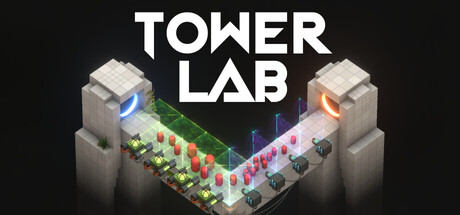
- Tower Lab upgrade priority should begin with research speed and core progression bonuses.
- Game Speed and Attack Speed improve run tempo and help stabilize early farming.
- Economy research becomes more valuable as runs grow longer and upgrade costs increase.
- Flexible lab slots should support your current build instead of copying a fixed queue.
- Premium currency is usually better reserved for permanent progression and lab unlocks.
Tower Lab Upgrade Priority Basics
Tower Lab upgrade priority is about improving long-term progression rather than winning one individual run. Lab research provides persistent bonuses, so the strongest queue is usually the one that improves future farming, unlocks better options, and reduces the time needed to reach important milestones.
Unlike temporary run purchases, research continues to benefit your account after the current session ends. This makes research speed, core combat stats, and economy bonuses especially valuable during the opening stages. A short upgrade can also be preferable to a powerful research project that occupies a lab for too long without solving an immediate progression problem.
Research Speed
- High long-term value
- Shortens future queue times
- Helps every active lab
Combat Core
- Improves wave consistency
- Supports higher-tier progress
- Useful when runs fail early
Economy
- Increases coins and cash flow
- Strengthens workshop growth
- Scales with longer runs
Choose the upgrade that improves the greatest number of future runs, not simply the upgrade with the largest visible percentage.
A practical queue normally has three layers:
- Acceleration: Research speed and general run-speed improvements.
- Stability: Attack, health, defense, and other bonuses that prevent early failures.
- Scaling: Coin, cash, multiplier, and build-specific research for sustained growth.
| Upgrade Area | Main Benefit | Best Timing | Priority |
|---|---|---|---|
| Research Speed | More research completed over time | Early and often | ★★★★★ |
| Game Speed | Faster overall run progression | Early game | ★★★★★ |
| Attack Speed | Better damage consistency and utility | Early to mid game | ★★★★★ |
| Economy | More resources for permanent upgrades | Early to late game | ★★★★☆ |
| Build Utility | Supports a specific strategy | After core needs | ★★★☆☆ |
Early-Game Research Queue
In the early game, your goal is to make every run faster, more reliable, and more rewarding. Research speed deserves a dedicated position whenever possible because it compounds across the entire account. Game Speed is also a strong early target because it reduces the time spent reaching the waves where your main income and progress are generated.
Attack Speed is a dependable combat choice after the first acceleration goals are secured. It improves repeated attacks and can support several different tower setups. Health, defense, and damage research should be added when your runs are failing because of survivability or damage checks rather than slow progression.
| Lab Role | Recommended Focus | Substitute Research |
|---|---|---|
| Acceleration Slot | Game Speed | Attack Speed |
| Research Slot | Lab or Research Speed | Short combat research |
| Economy Slot | Coins per Kill | Cash or income bonus |
| Stability Slot | Health or Defense | Damage or utility |
| Flexible Slot | Current bottleneck | Quality-of-life research |
Use short or moderate research projects when your account is still developing. This keeps the queue responsive and lets you react to new unlocks. Long projects become more attractive once your priorities are clear and your labs can remain active without frequent changes.
Do not fill every lab with unrelated damage upgrades while research speed, run speed, or economy improvements remain underdeveloped.
A useful early-game rule is to keep at least one lab focused on acceleration, one on economy, and one on the stat that is currently limiting your best runs. This prevents a common mistake: building strong combat numbers while lacking the income needed to buy permanent upgrades.
If Runs Are Too Slow
Prioritize Game Speed, research speed, and efficient income bonuses.
If Runs End Early
Add Health, Defense, or Attack Speed before investing heavily in niche utility.
If Progress Feels Expensive
Improve Coins per Kill, cash generation, and other economy research.
Mid-Game Economy and Combat Balance
Mid-game progression requires a more balanced queue. Research speed remains valuable, but a permanently dedicated slot may no longer be enough to address every bottleneck. At this point, economy research often produces the largest practical improvement because stronger income lets you buy more workshop upgrades during and between runs.
Coins per Kill is a natural priority for sustained farming. Cash-related research can also help when your build depends on purchasing many upgrades inside a run. If a major income mechanic or multiplier is available, research that improves its bonus, duration, or consistency can be more valuable than another small general damage increase.
| Mid-Game Problem | Research Direction | Why It Helps |
|---|---|---|
| Runs lack coins | Coins per Kill | Improves permanent upgrade funding |
| In-run purchases feel weak | Cash Bonus | Adds flexibility during waves |
| Damage falls behind | Attack Speed or Damage | Improves wave clear consistency |
| Towers die before income scales | Health or Defense | Extends useful run duration |
| Queue times are too long | Research Speed | Increases account-wide progress |
Do not treat economy and combat as separate systems. Better combat extends runs, while better economy makes combat upgrades easier to purchase. The right balance depends on which failure appears first.
Follow this test:
- If you die before reaching your normal income waves, improve survivability or damage.
- If you survive comfortably but gain resources slowly, improve economy.
- If research queues are the main source of waiting, improve research speed.
- If one specific mechanic is carrying your build, research its supporting bonuses.
- If no clear weakness exists, choose the shortest high-value project available.
A healthy queue should improve either your average run income, your reliable wave count, or the number of useful researches completed each week.
Identify the First Failure
Review where your runs stop improving. Separate damage problems, survivability problems, income problems, and research-time problems.
Assign One Lab to the Bottleneck
Reserve one active lab for the stat directly connected to that failure instead of spreading small upgrades across several categories.
Protect Your Economy
Keep at least one research slot on coins, cash, or another reliable income improvement unless combat progress has stalled completely.
Review After Several Runs
Compare results across multiple runs before changing direction. A single unlucky run should not determine your entire research queue.
Managing Research Time and Lab Slots
Additional labs are valuable because they let you research several progression categories at once. However, unlocking more slots does not automatically solve poor prioritization. Each lab should have a clear job, and the jobs should change as your account develops.
A simple arrangement is to maintain dedicated roles:
- Acceleration lab: Research speed or general run-speed improvements.
- Combat lab: Attack Speed, damage, health, or defense.
- Economy lab: Coins, cash, and multiplier-related research.
- Utility lab: Perks, projectiles, ultimate systems, or quality-of-life effects.
- Flexible lab: Whatever currently limits progress.
| Lab Count | Suggested Structure | Main Goal |
|---|---|---|
| 1 | Acceleration only | Build the research foundation |
| 2 | Acceleration plus combat | Improve speed and run stability |
| 3 | Add economy | Support permanent progression |
| 4 | Add second economy or combat slot | Reduce major bottlenecks |
| 5 | Add flexible utility slot | Adapt to builds and new unlocks |
Research acceleration resources should be spent carefully. A moderate speed boost across several active labs may create more total progress than placing the largest possible boost on one queue. Before accelerating, compare the time saved with the cost and consider whether the same resource has a more permanent use.
Avoid changing a research project repeatedly unless the new choice clearly improves your progression. Frequent queue changes can waste planning opportunities, especially when the replacement research has a similar impact to the original.
Use flexible slots for adaptation, but keep your acceleration and economy roles stable enough to preserve long-term momentum.
| Decision | Recommended Action | Reason |
|---|---|---|
| A research finishes soon | Queue the next bottleneck upgrade | Keeps the lab productive |
| A long project is underway | Let it finish if still relevant | Avoids unnecessary resets |
| Several labs are idle | Fill the permanent roles first | Protects account-wide growth |
| Speed resource is limited | Use moderate boosts selectively | Better efficiency across queues |
| A new system unlocks | Test it in the flexible slot | Avoids disrupting core research |
Build-Specific Research and Weekly Checklist
Once your core acceleration, combat, and economy needs are covered, research can be tailored to your preferred build. Build-specific upgrades are valuable when they improve a mechanic you use consistently. They are less valuable when chosen only because the description looks powerful.
For example, a build centered on orbs may benefit from orb-related utility, while an ultimate-focused setup may gain more from ultimate research. Perk and quality-of-life research can also become attractive once your account has enough basic strength to clear runs consistently.
Core Progression
Game Speed, research speed, Attack Speed, and basic economy.
Survivability
Health, Defense, damage reduction, and run-extension effects.
Build Utility
Orb, projectile, perk, or ultimate-related research.
Quality of Life
Improvements that reduce friction or make long sessions easier to manage.
Use the checklist below when reviewing your queue in 2026:
Research Queue Review:
- Keep at least one active research focused on long-term acceleration
- Check whether your current failure is damage, defense, income, or research time
- Maintain a reliable economy slot during sustained progression
- Use flexible research for build-specific systems and quality-of-life upgrades
- Review the queue after several runs instead of reacting to one result
A strong priority list is not permanent. When your runs move into a new tier, the best upgrade can change. Recheck your queue after unlocking a new mechanic, reaching a major milestone, or noticing that one resource has become much harder to obtain.
Before starting research, ask whether the upgrade will improve your next several runs, your future queues, or both.
| Priority Tier | Research Type | Use Case |
|---|---|---|
| S Tier | Research speed, Game Speed, Attack Speed | Broad account progression |
| A Tier | Economy, health, defense, damage | Current bottleneck support |
| B Tier | Build-specific utility | Established strategy improvement |
| C Tier | Niche quality-of-life upgrades | Personal preference or late progression |
Tower Lab Upgrade Priority FAQ
Q: What is the best Tower Lab upgrade priority for beginners?
Start with research speed and Game Speed, then add Attack Speed, basic economy, and the combat stat connected to your earliest run failures.
Q: Should every lab focus on the same upgrade category?
Usually no. Multiple labs are strongest when they cover acceleration, combat, economy, and one flexible role at the same time.
Q: When should I prioritize economy research over damage?
Choose economy when your runs survive long enough but resource growth feels slow. Choose damage or defense when runs end before income can scale.
Q: Are build-specific upgrades worth researching early?
They can be useful, but general acceleration, combat stability, and economy usually provide broader value before a specialized build is established.
The most reliable research plan combines faster queues, stable runs, stronger income, and one flexible slot for changing progression needs.